Suspension, Steering, and Wheel Services in North Billerica, MA
RELATED SERVICES:
Services> Suspension Steering Wheel
Suspension and Steering Specialists in North Billerica
Suspension and steering repair in Billerica, MA, covers a connected system of shocks, struts, control arms, ball joints, tie rods, sway bar links, and the steering rack. Pro Tire & Tune services all these components on domestic and imported vehicles under one roof. New England potholes, frost heaves, and road salt can wear down suspension and steering components faster than expected. This is especially common on damaged sections of Boston Road and frost-cracked side streets throughout Tewksbury and Chelmsford.
Our shop handles everything from shock and strut replacement to control arm repair and power steering diagnosis. We also perform rack-and-pinion repairs, wheel balancing, and alignment checks after every suspension job. The lead technician and owner have worked side by side for 15 years, which keeps the diagnostic process consistent from one visit to the next.
Suspension, Steering, and Wheel Services
Your vehicle's suspension and steering systems work together to maintain stability, handling, and control. A worn control arm bushing can change the load on a tie rod, affecting steering performance. Worn shocks can contribute to excessive suspension movement and uneven tire wear, while loose ball joints may affect wheel alignment and steering stability. Pothole-heavy roads around Billerica and Lowell concentrate these failures into predictable patterns, so the inspection looks at the full system before replacing any single component.
Air Suspension
Air suspension problems in vehicles like the Audi Q7, Mercedes GL, and certain Jeep Grand Cherokee models can cause one corner to sit low overnight. You may also notice slow lifting after startup or a dashboard warning light. Common causes include a leaking air strut bladder, a failed compressor, or a cracked air line. Road salt and moisture from Route 3 and I-495 can accelerate corrosion, particularly around the air line fittings.
We start by scanning for height-sensor and compressor codes, then pressurize the system and check each strut and air line fitting for leaks using soapy water.
The repair depends on what we find during diagnosis. If an air strut leaks, we replace it as a sealed unit. For a failed compressor, we install a replacement and check the drier assembly. If an air line cracks, we cut it back to clean material and refit it with the correct collet. After repairs, we cycle the system through its ride-height range and measure each corner against factory specifications to confirm proper operation.
Control Arms
Clunking over expansion joints and a dull thud when turning into a parking lot often indicate worn control arms or bushings. Uneven wear along the inner edges of your tires is another common warning sign. Control arm bushings often fail first as years of freezing and thawing harden and crack the rubber, with ball joint wear typically following. On the roads around North Billerica, repeated pothole hits accelerate this because each impact loads the bushing in a direction it was not designed to handle.
We inspect each bushing and ball joint with a pry bar, using a dial indicator to measure movement against manufacturer limits when required. We typically replace the complete control arm assembly rather than pressing in a new bushing. On most late-model vehicles, the additional labor outweighs the savings on parts. After every control arm replacement, we perform a wheel alignment to reset toe and camber.
Power Steering Repair
Heavy steering at low speeds, whining noises when turning, or fluid pooling beneath the front of your car can indicate power steering problems. On hydraulic systems, common causes include a leaking pressure line, a worn pump, or a leaking steering rack seal. Electric power steering (EPS) problems usually involve sensor or module faults that trigger specific diagnostic trouble codes.
We scan EPS-equipped vehicles for fault codes and use dye tracing or UV light to pinpoint hydraulic steering leaks before ordering parts. We choose the repair based on what our diagnosis reveals. This may involve replacing the power steering pump and flushing the fluid or replacing a faulty pressure hose. If we confirm a sensor failure, we replace the sensor and perform an EPS module relearn.
Rack and Pinion Replacement
A rack-and-pinion assembly typically fails in two ways. Internal seal leaks can cause fluid loss and heavy steering. Worn internal bushings can make the steering feel loose around the center position and cause clunking when turning the wheel from lock to lock. Salt intrusion through the inner tie rod boots can accelerate rack-and-pinion wear on vehicles driven through Billerica and Chelmsford winters. Once a boot splits, road salt and moisture can enter the rack housing.
We inspect both inner tie rod boots on the lift, check the pinion seal for leaks, and measure steering wheel play from lock to lock.
Most vehicles require a complete rack assembly replacement. We also flush the power steering fluid and bleed the system to remove trapped air. After installing the new rack, we perform a four-wheel alignment on the Hunter alignment lift to reset the toe settings. A wheel alignment is essential after rack replacement because the new unit may sit differently, affecting toe settings as soon as installation begins.
Shocks and Struts Replacement
Worn shocks and struts cause excessive body motion over bumps, nose-dive under braking, and faster tire cupping than normal driving should produce. See the shocks and struts replacement page for the full inspection scope, part options, and what to expect during the appointment.
Strut Mount Replacement
A failing strut mount can cause a sharp clunk from the top of the strut tower when driving over bumps. You may also hear creaking when you turn the steering wheel all the way. These noises often come from a worn upper bearing or cracked isolator on the MacPherson strut. Freeze-thaw cycles in Middlesex County can also damage the rubber as trapped moisture freezes and expands.
We diagnose it by turning the wheel with the suspension unloaded on the lift and listening at the tower for a click or bind. We replace mounts in pairs, often with the strut since the labor overlaps, and a four-wheel alignment follows because camber shifts when the mount is disturbed.
Tie Rods and Ball Joints
Tie rods and ball joints connect the steering knuckle to the rest of your vehicle, so wear in either component can make steering feel loose. A worn outer tie rod end can cause highway wandering and uneven front tire wear. Meanwhile, a worn ball joint may cause clunking over bumps or creaking during low-speed turns.
Each pothole hit on a frost-heaved North Billerica road shocks these joints, and once a boot splits, road salt and water wash out the grease inside. Severely worn ball joints can compromise steering and suspension safety. We check joint movement against applicable specifications and recommend prompt repair when we find excessive wear.
We inspect every inner and outer tie rod end and ball joint on the lift, checking for movement by rocking the wheel and using a pry bar. On trucks equipped with a pitman arm, we inspect that component as well. We press out or separate worn joints and replace them. A four-wheel alignment on the Hunter alignment lift follows every tie rod job, since replacing one changes toe.
Tire Installation and Service
Worn or mismatched tires lengthen stopping distances on snow and ice, which matters through a Massachusetts winter. We mount and balance tires on Hofmann tire machines, measure tread with a tread depth gauge, and torque every lug nut to specification. See the tire installation and service page for new tire installation, seasonal changeovers, and TPMS service with new tires.
Tire Rotation and Alignment
Misalignment destroys new tires within a few thousand miles, and Massachusetts potholes make an alignment check a yearly job. Your vehicle may pull to one side or have an off-center steering wheel when alignment angles are out of specification. You may also notice uneven wear along the inside or outside edge of a tire. See the tire rotation and alignment page for our free alignment inspection and four-wheel alignment on the Hunter alignment lift.
TPMS Service
A tire-pressure light that stays on after you inflate the tires may indicate a TPMS sensor problem. A blinking light followed by a steady warning can also signal sensor failure. Each sensor has a sealed battery that eventually wears out, while road salt can corrode the valve stem.
We read each sensor's signal and battery status to tell which wheel is at fault and whether it's a sensor or a pairing issue. A failed sensor gets an OEM TPMS sensor and a new valve stem, then the manufacturer's relearn so the light goes off and stays off.
Wheel Balancing
Vibration at highway speeds is uncomfortable, and it's also a sign that tires and wheel bearings are wearing faster than they should. An unbalanced wheel assembly usually shakes the steering wheel between 55 and 70 mph if the problem is in front, or the seat if it's in the back. Over time, it also wears flat spots into the tread. Wheel weights can fall off after a pothole hit, and tires wear unevenly as they age. Both throw off the balance, which is why a shake can appear months after new tires were installed.
We balance on a Snap-on wheel balancer with hub-centric mounting. That way the wheel is centered the same way it sits on the car, and the reading reflects how the tire will actually roll.
Wheel Bearing Repair
A humming or grinding noise that gets louder with speed and changes when you steer left or right is the classic sign of a worn wheel bearing. A bad bearing can also damage the ABS wheel speed sensor and turn on a warning light. See our wheel bearing repair page to learn how we diagnose the noise and replace sealed hub bearings and press-fit bearings.
Suspension and Steering Symptoms That Need Attention
We tailor each inspection to when and how the suspension symptoms appear, then identify the cause before recommending any parts.
Clunking Over Bumps
A clunk when crossing a pothole or railroad track usually traces to a worn control arm bushing, a failing ball joint, a loose sway bar link, or a tired strut mount. Salt-corroded fasteners and brittle rubber bushings are common on vehicles driven through Lowell and Wilmington winters. We confirm the actual problem through a physical inspection on the lift rather than relying on guesswork. See the shocks and struts replacement section above for the related repair path when the strut itself is involved.
Steering Wheel Vibration at Highway Speed
A steady vibration that starts above 50 mph and fades at lower speeds often points to a wheel balance problem. A pothole impact on I-495 or Route 3 may knock off a wheel weight and cause the vibration. If the vibration appears only during braking, the cause shifts to uneven brake rotor wear rather than a suspension fault, and the diagnostic path changes.
Vehicle Pulling to One Side
Pulling points to one of three sources: an alignment that has drifted out of specification, uneven tire pressure or tread wear, or a dragging brake caliper. We start by checking tire pressure, then measure alignment on the Hunter alignment lift. If both checks come back clear, we inspect the brakes to pinpoint the actual cause.
Loose or Wandering Steering
A steering wheel that feels loose around the center position or needs constant correction on the highway may indicate a steering problem. Common causes include worn inner or outer tie rod ends, a failing rack and pinion, or a worn intermediate steering shaft coupling. The inspection measures play at each joint and in the steering column before any component is replaced.
Grinding or Humming from a Wheel
A hum or grind that changes pitch with vehicle speed and sometimes with turning direction is the classic wheel bearing failure signature. See the wheel bearing repair page for the diagnostic and replacement scope on that specific repair.
Concerned about these symptoms?
How Pro Tire & Tune Handles Suspension and Steering Service
Every suspension inspection starts with a short road test on local roads. Our technician notes when the symptoms appear, at what speed, and whether braking, cornering, or straight-line driving makes them worse. This information narrows the inspection before the vehicle goes on the lift, which keeps diagnostic time and the customer's bill accurate.
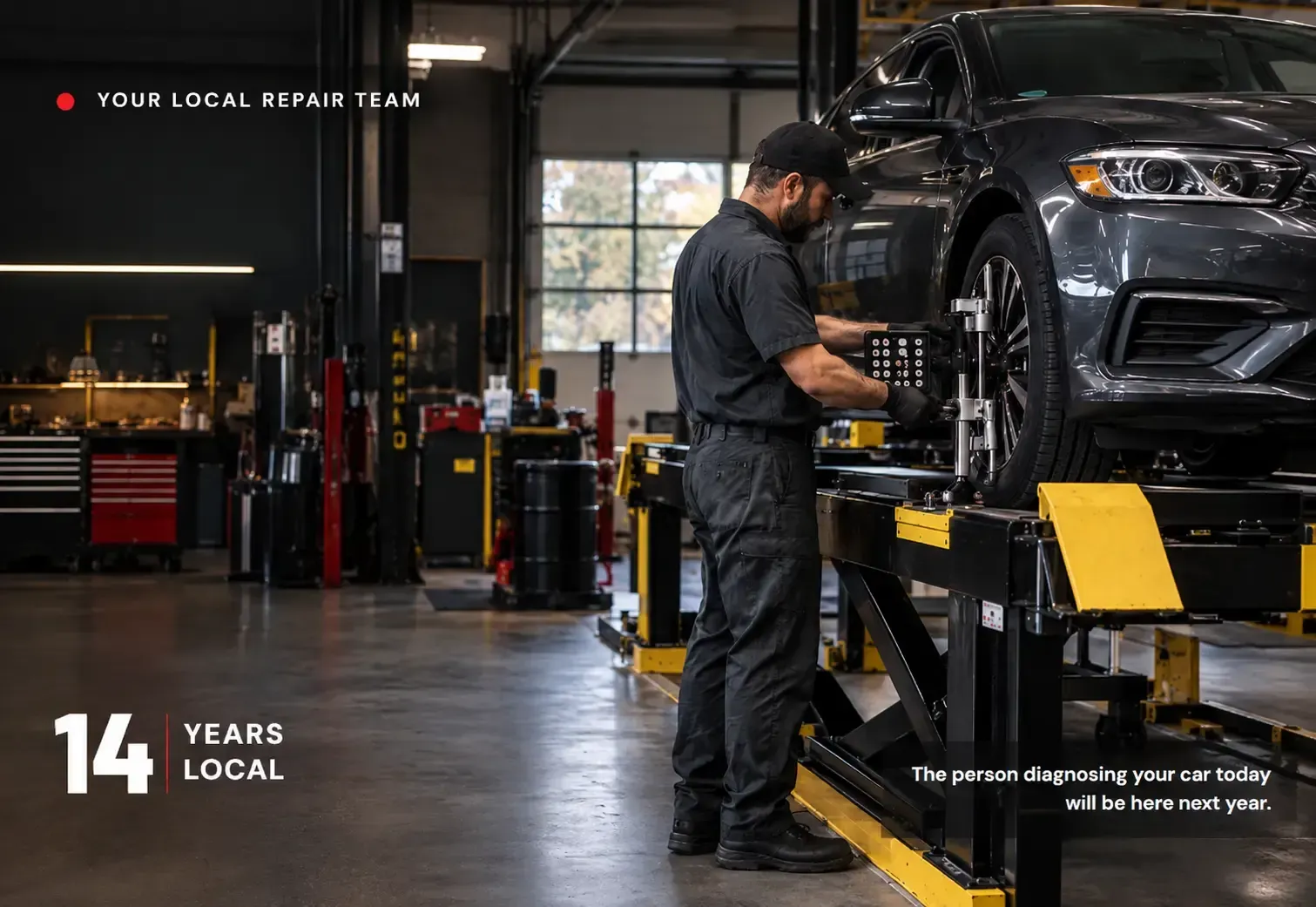
On the lift, we use a pry bar to check front and rear ball joints, tie rod ends, sway bar links, and control arm bushings. We examine shocks and struts for leaks or visible damage and inspect CV axle boots for tears that could allow contamination and premature joint wear.
We measure alignment angles on the Hunter alignment lift during every suspension inspection. This helps us catch alignment problems even when you didn't specifically request an alignment. We document findings with a written estimate before any work starts.
We explain every recommended replacement, why the component needs attention, and what could happen if you delay the repair. We recommend only parts we can show are worn or damaged on your vehicle.
Why Drivers in Billerica Trust Pro Tire & Tune for Steering and Suspension Service
Proper suspension repairs include checking whether wheel alignment is necessary to help protect tire life and maintain predictable handling. The owner and lead technician have worked together for 15 years, providing consistent service and no-upsell pricing. Drivers across North Billerica, Lowell, Tewksbury, Chelmsford, and Wilmington also appreciate that every suspension job includes a Hunter alignment lift check.
- We use quality OEM-equivalent parts for every suspension and steering repair.
- We include a four-wheel alignment after every suspension component replacement and measure the results on our Hunter alignment lift.
- We offer free loaner cars on a first-come, first-served basis to help you stay on track while your vehicle is in the shop.
- We complete most suspension and steering repairs the same day.
- We've operated at the same North Billerica location for 14 years, with an owner-operated service bay and a lead technician who has been with us for 15 years.
- You can take care of tires, suspension, steering, brakes, and alignment in one visit at our shop.
Our Promise to You
- We provide a written estimate before starting any work, with no unexpected charges or add-ons when you pick up your vehicle.
- We show you each recommended repair and point out worn or damaged parts before replacing them.
- Our team explains which repairs need immediate attention, which can wait, and the costs and trade-offs involved.
- We keep a repair history on file for every vehicle, so we can refer to previous work during future visits.
We also offer brake repair and safety inspection and preventive maintenance services, all under one roof.
Suspension and Steering FAQs
How much does suspension repair cost?
Suspension repair costs depend on the specific problem and the parts your vehicle needs. Pro Tire & Tune provides a written estimate after inspection, based on the actual repairs required. We never start work without your approval.
What are the signs of a bad suspension?
Common signs of a bad suspension include clunking over bumps, nose-diving when braking, and excessive bouncing after hitting potholes. You may also notice uneven or cupped tire wear or your vehicle pulling to one side. These symptoms can indicate worn shocks, struts, or other suspension components that need inspection.
How long does suspension repair take?
Most suspension repairs are completed the same day, including shock and strut replacement, control arm replacement, and sway bar link repair. Rack and pinion jobs and air suspension work can take a second day, depending on parts availability.
Can I drive with worn shocks or struts?
A vehicle with worn shocks or struts is still drivable, but braking distance increases, tires wear faster, and handling in emergency maneuvers degrades noticeably.
How often should suspension components be replaced?
Suspension components don't have a fixed replacement schedule, but shocks and struts typically last between 50,000 and 100,000 miles, depending on driving conditions. Bushings and ball joints often last longer, though rough New England roads can wear them out sooner. Regular inspections help identify worn parts before they affect handling and tire wear.
Ready for Expert Suspension and Steering Repair?
Worn suspension and steering components stretch braking distances, accelerate tire wear, and make the vehicle less predictable on the exact kinds of roads most drivers cover daily. We perform a four-wheel alignment after every suspension component replacement and measure the results on our Hunter alignment lift.
The shop's warranty backs qualifying suspension and steering repairs. Call to schedule or stop in during business hours.
