
Electrical System Repair in Billerica, MA
RELATED SERVICES:
Services> Auto Electrical Repair
Complete Electrical System Repair for North Billerica Drivers
Pro Tire & Tune provides auto electrical repair in Billerica, MA, for batteries, starters, alternators, wiring, and other electrical components. We also inspect the wiring harness that connects your vehicle's accessories and control modules.
Your car might not start one morning on Boston Road, or your Toyota Camry's headlights might dim while idling near the Route 3 exit. You might also notice a flickering battery warning light in your Jeep while driving through Chelmsford. These problems often point to the starting system, charging system, or an electrical drain that slowly depletes the battery overnight.
Pro Tire & Tune handles starter and alternator repair, alternator replacement, wiring repair, and battery registration for late-model Audi, BMW, and Mercedes-Benz vehicles. Our lead technician has worked alongside the owner for 15 years, so the same hands handle repeat issues. We back our repairs with a written warranty and offer free loaner cars on a first-come, first-served basis.
Electrical System Repair Services
Your vehicle's electrical system works as one connected circuit. The battery stores power, the starter cranks the engine, and the alternator and voltage regulator recharge the battery while you drive. The wiring harness supplies power to the vehicle's electrical modules.
When one part weakens, the others strain to cover for it until something else fails. Cold Massachusetts winters and road salt accelerate that, which is why we diagnose the whole circuit before replacing any part.
Alternator Repair and Replacement
A failing alternator can cause dim headlights at idle or trigger the battery warning light after a few minutes of driving. Your vehicle might also start normally in the morning but fail to restart after a quick stop. We verify output with a load test under electrical demand before replacing anything, and we match the OEM alternator specification for your vehicle.
See the alternator repair and replacement page for the full diagnostic and charging system repair scope.
Battery Replacement
A battery that cranks slowly on a cold Billerica morning or loses voltage under load may be nearing the end of its life. Corrosion around the battery terminals is another warning sign that needs attention. On late-model European vehicles, you must register the replacement with the battery management system so the alternator charges it correctly.
See the battery replacement page for battery testing, replacement, and registration details.
Starter Repair and Replacement
A single click without cranking, or slow cranking despite a healthy battery, may indicate a starter problem. If the starter only engages after several attempts, the issue may involve the starter motor, solenoid, or power cable. Cold Massachusetts winters can make these problems worse because weak batteries struggle to supply enough power to the starter. Road salt can also corrode cable ends, increasing electrical resistance and making starting more difficult.
Before removing any parts, we perform a battery load test and check for voltage drops across the cable and solenoid. These tests help us determine whether the problem requires a solenoid or wiring repair, or a complete starter replacement. If it needs replacing, we install an OEM starter and retest the starting system before the vehicle leaves, with most jobs done the same day.
Electrical Diagnostics
Accurate electrical diagnosis helps identify the underlying cause of a problem before parts are replaced, reducing the risk of unnecessary repairs. Dashboard warning lights, electrical problems that only appear in cold weather, or modules that disconnect while driving can indicate complex electrical issues. We use the Snap-on ZEUS scan tool to check live data across your vehicle's networks and identify the cause.
Commuter traffic on Route 3 and I-495 exposes vehicles to repeated temperature changes between a hot engine bay and cold outside air. These changes can worsen loose connections and corroded grounds, making intermittent electrical problems especially common during winter.
We check the problem while it's happening, rather than relying only on stored trouble codes. We use a digital multimeter to check for voltage drops in suspected circuits. We also test connector signals with an oscilloscope to confirm the issue before ordering any parts.
Battery Registration
Modern BMW, Mercedes-Benz, Audi, and Volkswagen vehicles track battery age, chemistry, and charge acceptance through the battery management system. Installing a replacement without registering it leaves the alternator charging to the old battery's profile, which shortens the new battery's life by months. We register every battery on vehicles that require it using the manufacturer's protocol through the Snap-on ZEUS.
This is not an upsell; it is a documented step that protects the part you just paid for. If your vehicle requires registration and it was skipped at a previous replacement, we can register the existing battery during a diagnostic visit.
Parasitic Draw Testing
A parasitic battery drain occurs when something continues drawing power after you turn off your vehicle. It can drain the battery after just two or three days of sitting. Common causes include a module that won't shut down, a stuck relay, or an accessory that stays powered when the ignition is off.
Daily commutes through Tewksbury and Wilmington can hide this problem because the battery still has enough power to start the vehicle each morning. However, leaving the vehicle parked all weekend may drain the battery completely, leaving you with a car that won't start on Monday. A parasitic draw test measures sleep current on the battery negative cable after the vehicle times out, typically 40 to 60 minutes.
We then pull fuses one at a time to isolate the circuit, trace the circuit back to the component, and confirm the fault before replacement. Common causes include a glove box or trunk light that stays on after you close it. An incorrectly wired aftermarket amplifier or dash cam can also drain the battery. Another possible cause is a body control module that fails to enter low-power mode.
Power Window Repair
A power window that moves slowly, stops halfway, or doesn't respond may have a worn regulator or failing motor. Years of use can also damage the switch contacts and cause the window to malfunction. Road salt and winter moisture working into door seals accelerates corrosion inside the door shell, where the regulator and wiring harness live.
We test the switch, motor, and voltage at the connector before pulling the door panel to confirm whether the regulator assembly or the motor alone needs replacement. On vehicles with one-touch auto-up function, the window position must be relearned after replacement so the anti-pinch feature calibrates correctly.
Power Lock Repair
A door lock actuator may have a worn internal gear or failed solenoid if it cycles without latching. Other warning signs include a lock that responds to the key fob but not the switch, or clicks without moving the lock pin. Winter cold stiffens the plastic gears inside actuators, which is why many lock failures appear in January and February.
We measure voltage and current at the actuator connector while operating the switch. This helps us determine whether the problem comes from a faulty actuator, switch, or wiring. Replacement is typically a single actuator, not the full set.
Power Accessory Repair
Power seats, mirrors, sunroofs, and liftgates all run through dedicated motors, switches, and control modules. A seat that moves in one direction but not the other may have a faulty motor or switch. The same applies to mirrors that won't fold or sunroofs that hesitate when closing. These symptoms usually point to an individual component rather than a problem with the entire electrical system.
We diagnose each accessory as its own circuit, confirm the fault with voltage and ground checks, and recommend the specific component.
Wiring Repair
Faulty wiring can cause unpredictable electrical problems. A circuit might stop working when your vehicle hits a bump, or a fuse may blow only when it rains. You might also notice a signal dropping when a connector heats up.
Road salt and frequent freezing and thawing in Middlesex County can speed up wiring harness corrosion. Common trouble spots include engine bay grounds, under-hood connectors, and the rear wiring harness that powers taillights and trailer wiring.
When needed, we perform additional circuit and signal testing to pinpoint electrical faults before recommending replacement parts. We also seal every repair to keep moisture out. If a fuse blows, we check for overloaded circuits, damaged wiring, or faulty components to identify the cause before replacing it.
Key Fob Programming and Keyless Entry Repair
A key fob that only works at close range may have a different problem than a remote that stops responding after a battery replacement. A push-to-start vehicle displaying a "key not detected" message may have another cause. The problem could be a weak CR2032 key fob battery, a damaged transponder chip, or a fob that has lost its pairing. It could also involve a fault in the vehicle's remote keyless entry (RKE) module or immobilizer system.
We start by testing the fob's signal and battery. We use the Snap-on ZEUS to check the RKE module and immobilizer for stored faults, helping us determine whether the problem involves the fob or vehicle. We program new and replacement fobs, including proximity smart keys, using the manufacturer's procedure. On some makes, this requires the vehicle security PIN.
Ignition Switch Repair
An ignition switch that sticks or requires jiggling to start the engine may have worn internal parts. The same applies when accessory power cuts out unexpectedly. These symptoms often point to wear inside the ignition switch or lock cylinder, not an engine problem. People often confuse this symptom with a starter or battery fault.
We test continuity at the ignition harness in each switch position before replacing any parts. This helps us determine whether the problem comes from the ignition switch, lock cylinder, or wiring.
Electrical System Symptoms and Warning Signs
Car electrical problems need different diagnostic paths depending on when and how they occur. A charging-system problem shows up differently than a starting-system problem, and treating them the same wastes parts and time.
Vehicle Not Starting or Slow Cranking
A no-start that clicks once without cranking is usually a dead battery, a bad starter solenoid, or a corroded cable connection. Slow cranking with a recently tested good battery points to high resistance in the starting circuit, often a corroded ground strap or a loose battery terminal clamp. We confirm with a voltage drop test across each connection before replacing anything.
Battery Warning Light or Dim Headlights
A battery warning light while the engine runs means the charging system may not be working properly. Common causes include a failing alternator, faulty voltage regulator, or slipping serpentine belt that drives the alternator pulley. Dim headlights that brighten when the engine is revved confirm the alternator is undercharging. An alternator load test and a visual check of the belt and pulley separate the three causes.
Flickering Lights or Intermittent Electrical Issues
Flickering lights at idle, dashboard gauges that drop and recover, or accessories that turn on and off can indicate an electrical problem. Common causes include a loose ground, a failing diode rectifier inside the alternator, or a corroded wiring harness connector. We capture these faults with live data during a road test rather than relying on a stored code, since most intermittent faults do not set one.
Repeated Dead Battery After Short Sits
In most cases, a battery that dies after the vehicle sits two or three days has a parasitic draw, not a bad battery. We confirm with a sleep-current measurement and isolate the offending circuit by fuse before recommending the repair.
Concerned about these symptoms?
The Pro Tire & Tune Approach to Electrical System Repair
We start every electrical repair by asking whether symptoms appear during cold starts, after highway driving, in rainy weather, or after sitting overnight. This timing narrows the circuit before the hood opens, which is the single biggest predictor of a diagnosis that holds. We road test the vehicle when the symptom is intermittent so we can see it live, not infer it from codes stored days ago.
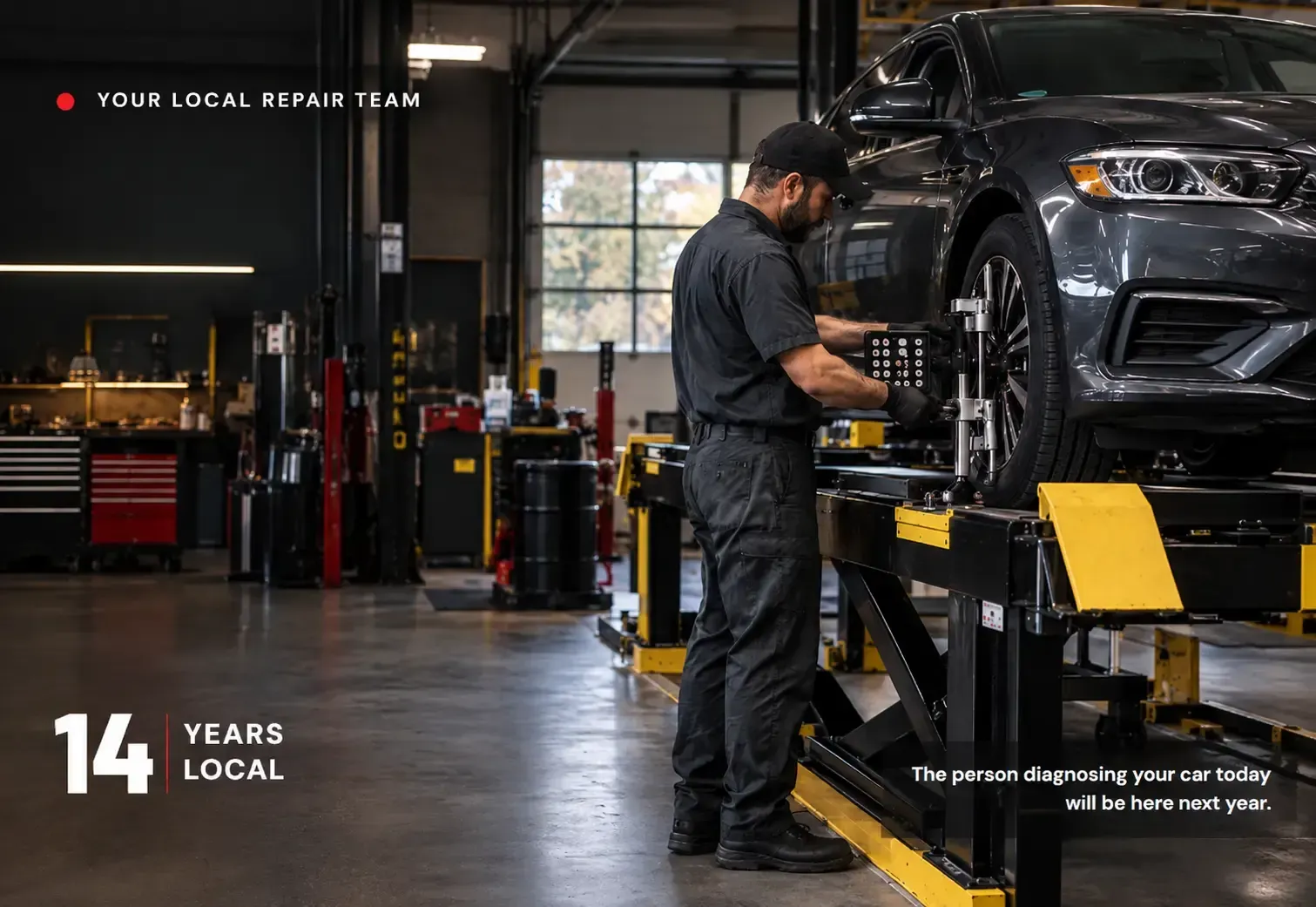
On the Rotary lift, we start with basic checks that many shops overlook. We perform a battery load test to confirm the battery's condition. We also check for voltage drops across the main cables and ground straps, then test the alternator's output under load.
The Snap-on ZEUS retrieves fault codes from every accessible vehicle module, not just the engine computer. This helps us identify problems in the body control, climate, and comfort modules. Without a full scan, these issues might look like unrelated electrical problems.
We prepare a written estimate before starting any repairs. We explain what we found, what the repair involves, and any available alternatives. You review and approve the work and price before we schedule anything. If we discover additional repairs, we call you for approval before adding any charges.
Why Billerica Drivers Choose Pro Tire & Tune for Electrical Repair
Electrical repairs done without proper diagnosis come back, and they come back expensive. We have built the inspection process and the measurement discipline to prevent that, which is reflected in many years of serving drivers across Billerica, Lowell, Tewksbury, Chelmsford, and Wilmington.
- Quality Parts You Can Trust: We use OEM parts for every charging and starting system repair.
- Written Repair Warranty: We back qualifying electrical repairs with a written warranty for added peace of mind.
- Free Loaner Cars: We offer free loaner cars on a first-come, first-served basis, so you can get around while we repair your vehicle.
- Advanced Electrical Diagnostics: We use the Snap-on ZEUS diagnostic tool to scan your vehicle's systems and check for faults across multiple modules.
- Experienced, Consistent Service: As an owner-operated shop with the same lead technician for 15 years, we maintain a consistent approach to diagnosing electrical problems.
- Fast Turnaround Times: We complete most electrical repairs on the same day when the necessary parts are in stock.
Our Promise to You
- We use actual diagnostic test results to guide our repair recommendations rather than relying on trouble codes alone.
- We provide a clear estimate with upfront pricing before starting any repairs, so you know what to expect, with no hidden fees.
- We give honest recommendations without pushing unnecessary services. We also tell you when a repair isn't worth making.
- Our ASE-certified technicians handle your vehicle's electrical repairs.
For related work, see engine diagnostics and check engine light diagnostics.
Auto Electrical Repair FAQs

How much does it cost to replace an alternator?
The cost of alternator replacement depends on your vehicle and the repairs needed. We provide a written estimate after confirming the alternator is faulty through a load test. A weak battery or slipping serpentine belt can cause similar symptoms and may cost much less to fix.
What are the signs of a failing alternator?
Common signs of a failing alternator include dim headlights at idle, a battery warning light, and electrical accessories that behave unpredictably. You may also notice the warning light appearing after a few minutes of driving or your vehicle failing to restart after a short stop. We perform an alternator load test to confirm the problem before ordering replacement parts.
Is it the battery or the alternator that's bad?
A battery load test and an alternator output test can determine which component is causing the problem. If the battery fails the load test but the alternator charges correctly, the battery is likely faulty. If the battery tests healthy but the alternator produces low or inconsistent output, the problem may involve the alternator or voltage regulator.
Can I drive with a bad alternator?
Driving with a failing alternator is risky because your vehicle may lose power and stall unexpectedly. If the alternator stops charging, the vehicle relies on the battery to power essential electrical systems. How long it continues running depends on the battery's condition, electrical demand, and vehicle type. Once the battery voltage drops too low, the engine may stall and fail to restart.
How long does an alternator repair take?
Most alternator replacements take two to four hours of shop time, which usually means same-day turnaround if the part is in stock. European vehicles and some trucks with difficult access can take longer.
Schedule Your Electrical System Repair Service in Billerica Today
A dead battery on a cold morning, a persistent battery warning light, or an electrical problem another shop couldn't diagnose can leave you worried about your vehicle. These are exactly the kinds of issues we built our shop to handle. Qualifying repairs are backed by our written warranty, and loaner cars are available on a first-come, first-served basis to keep your week on track.
